Two copies of the theatre programme of the Royal Lyceum Theatre in London for the play Madame Sans-Gêne by Victorien Sardou and Émile Moreau under the artistic direction of Henry Irving. The adaptation of the play was undertaken by J. Comyns Carr.
Royal Lyceum Theatre (London)Theatre programme by the Empire Theatre of Varieties in London. Advertisements inside the programme as well as an inserted theatre ticket. On the front cover are the names of the artistic directors.
The Empire Theatre of Varieties (London)Four-page theatre programme issued by the French newspaper L’illustration on the theatrical plays Le Dépit amoureux by Moliere and Le Monde où l’on s’ennuie by Édouard Pailleron at the theatre Comédie Française. Portrait of the French actress Suzanne Reichenberg on the front cover. There are 2 inserted tickets from the Royal Lyceum Theatre of London.
L’illustration (newspaper)Two copies of a four-page theatrical programme issued by the French newspaper L’illustration for the plays Le Joie fait peur by Mme Émile [Delphine] de Girardin and Le Barbier de Séville by Pierre-Augustin Caron de Beaumarchais at the Comédie Française theatre. On the front cover, portrait of the French actor Coquelin Cadet (Alexandre Honoré Ernest Coquelin).
L’illustration (newspaper)Theatre programme issued by the French newspaper L’illustration for the play Faust by Jules Barbier and Michel Carré at Opéra de Paris. Portrait of the French actress Lucy Berthet on the front cover. Advertisements on back cover and inside the programme.
L’illustration (newspaper)Theatre programme issued by the French newspaper L’illustration for the plays at Théâtre du Palais-Royal in Paris. Information on the actors and contributors of the play Le Dindon by Georges Feydeau. The price of the programme is on the front cover: “Dix Centimes”.
L’illustration (newspaper)Theatre programme issued by the French newspaper L’illustration for the plays at Théâtre de l’Ambigu-Comique in Paris. Information on the actors and contributors of the play Les Deux Gosses by Pierre Decourcelle. The price of the programme is on the front cover: “Dix Centimes”.
L’illustration (newspaper)Theatre programme issued by the French newspaper L’illustration for the plays at Théâtre du Gymnase in Paris. Information on the actors and contributors of the play La carrière by Abel Hermant. The price of the programme is on the front cover: “Dix Centimes”.
L’illustration (newspaper)Theatre programme issued by the French newspaper L’illustration for the plays at Théâtre du Vaudeville in Paris. Information on the plays La Douloureuse by Maurice Donnay and En visite by Henri Lavedan. Advertisements on back cover and inside the pamphlet.
L’illustration (newspaper)Two copies of a four-page theatrical programme issued by the French newspaper L’illustration for the plays L’Autographe by Henri Meilhac and Oedipe roi (Oedipus Rex by Sophocles translated by Jules Lacroix) at the Comédie Française theatre. On the front cover, portrait of the French actor Jean-Sully Mounet.
L’illustration (newspaper)Theatre programme issued by the French newspaper L’illustration for the plays at Théâtre de l’Odéon in Paris. Information on the actors and contributors of the play Le Chemineau by Jean Richepin. The price of the programme is on the front cover: “Dix Centimes”.
L’illustration (newspaper)Four-page concert programme at the venue Alcazar d’Été. The illustrator of the poster, Adolphe Willette, is mentioned on the front cover. The programme is an insert in the French journal Le Courrier français; its details are mentioned on the back cover. The price of the programme is on the front cover: “Quinze Centimes”.
Le Courrier français (journal)Four-page theatre programme of the "Nea Skini" of Konstantinos Christomanos. It refers to the performance of the works Alcestis and The left hand in the Athens Municipal Theatre in 1902. It bears a photograph of the leading actress on the cover and the logo of "Nea Skini" in the upper part of the second page. Festive performance in honour of athletes.
Nea Skini (of Konstantinos Christomanos)Four-page programme of the Faliron Theatre for the performance of the comic opera Les mousquetaires au couvent by a French cast, under the artistic direction of Bizet-Dufaure.
Théâtre du PhalèreAdvertisement card of the Empire Theatre in London. Information about a morning performance.
The Empire Theatre (London)Handwritten English translation of the poem"Melancholy of Jason, Son of Cleander: Poet in Commagene: 595 A.D." by G. Valassopoulo on one side of a sheet; handwritten note on the verso: "Done. Not copied yet". Accompanied by a piece of paper with handwritten notes by Cavafy on the translation of the poem, on one side. Blank verso. Broadsheet with the original poem printed in 1924 (note in brackets that it was first printed in June 1921). Blank verso.
[Valassopoulo, George A.]Manuscript of the poem "In 31 B.C. in Alexandria" on one side of a ruled sheet. Cancellations and emendations. Blank verso.
Cavafy, C. P.Manuscript of the poem "In 31 B.C. in Alexandria" on one side of a ruled sheet, signed by Cavafy. Number "69" at top right. Date ("7 July 1924") and brand name of the Kasimatis and Ionas printing house below the poem. Cancellation and emendation. Blank verso. Printer's copy.
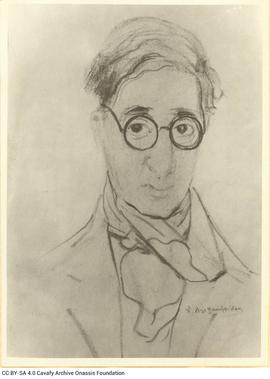
Cavafy, C. P.Polygraphed copy of the handwritten poem "The Windows". Emendation in the beginning of verse 5, handwritten by the poet. On the verso, a sketch in pencil, depicting Cavafy in facial view, wearing glasses.
Cavafy, C. P.Polygraphed copy of a handwritten poem ("The Windows"). Signed: "C. P. Cavafy".
Cavafy, C. P.Handwritten notes on the poem "The Windows" in ink, on both sides of a sheet of paper. The title is written and underlined in red ink.
Cavafy, C. P.Typewritten English translations of the poems "The Tomb of Lysias the Grammarian" and "The City" on one side of separate sheets, in two copies each. George Valassopoulo is mentioned as translator at the end of the text.
[Valassopoulo, G.]Handwritten English translation of the poem "The Tomb of Lysias the Grammarian" by G. Valassopoulo on one side of a sheet, with handwritten emendations by Cavafy in pencil on the text and notes of his on the verso, some crossed out. Printed broadsheet with the poem in Greek and year of publication (1919). Blank verso. Copy of Valassopoulo's translation by Cavafy on the recto of half a sheet, with the emended text. Blank verso. Three crossed out handwritten notes by Cavafy on the translation of the poem on one side of a piece of paper. Blank verso.
Valassopoulo, G.Typewritten English translation of the poem "The Tomb of Lysias the Grammarian" by G. Valassopoulo on one side of a sheet. Blank verso. Two copies.
Valassopoulo, G.Typewritten English translation of the poem "Tomb of Lanes" by G. Valassopoulo on one side of a sheet, with handwritten emendations. Blank verso. Handwritten note by Cavafy that the translation has been sent to E. M. Forster, on a piece of paper.
Valassopoulo, G.English translation of the poem "Tomb of Lanes", in five typewritten copies. One of them bears handwritten emendations and changes made by the poet, which have been incorporated in the other typewritten copies, and mentions G. Valassopoulo as translator. Another typewritten copy mentions, below the text, G. Valassopoulo and "Ε.M.F." (obviously E. M. Forster) as translators. Another typewritten copy mentions: "Translated by V. F. C." (the words, except for the first one, have been handwritten by Cavafy). They are most likely the initials of Valassopoulo, Forster and Cavafy. Clipping from a printed broadsheet with the handwritten date 1926, which contains on one side the translation of two verses of the poem and is also handwritten by Cavafy.
Valassopoulo, G.Handwritten English translation of the poem "Tomb of Lanes", by G. Valassopoulo on one side of a sheet. Cancellations and emendations. Handwritten note in pencil ("Done") on the verso. Crossed out handwritten notes by Cavafy on the recto of a piece of paper. Blank verso.
[Valassopoulo, George A.]Manuscript by Cavafy with the English translation of the poem "Tomb of Ignatius" by G. Valassopoulo, on one side of a ruled sheet. Blank verso.
Cavafy, C. P.Two typewritten copies of the English translation of the poem "Tomb of Ignatius" by G. Valassopoulo on one side of a sheet. Blank verso.
Valassopoulo, G.Handwritten English translation of the poem "Tomb of Ignatius", by G. Valassopoulo on one side of a sheet; handwritten cancellations, emendations and notes by Cavafy on both sides of the sheet. Handwritten notes by Cavafy on the translation of the poem on one side of a cut piece of paper, on the verso of an official print by the National Bank of Egypt as well as at the bottom right of the recto of a broadsheet with the original poem, printed in 1922.
[Valassopoulo, George A.]Handwritten translations into English of two of Cavafy's poems by G. A. Valassopoulo on both sides of a sheet. The crossed out poem "Grey eyes" on the recto. "21/ΙΙ" written at top left. The poem "The Tomb of Iases" ("Tomb of Iases"), with cancellations and emendations, on the verso. "22 ΙΙ" at top left and the final emended note "12" at bottom right.
[Valassopoulo, George A.]Handwritten English translation of the poem "Tomb of Eurion" by G. Valassopoulo on one side of a sheet; manuscript cancellations, emendations and notes by Cavafy on both sides of the sheet. Handwritten notes by Cavafy, most of them crossed out, on both sides of a cut piece of paper.
[Valassopoulo, George A.]Handwritten copy by Cavafy on an English translation by G. Valassopoulo of the poem "Tomb of Eurion" on one side of a ruled sheet. Emendation in ink. Blank verso.
Valassopoulo, G.Manuscript of the poem "The Tarentines Have Their Fun", written in ink on one side of a ruled sheet. The title has been underlined and there is a line in red ink below the poem. Cancellation and notes in pencil. Number "132" at top right. Blank verso.
Cavafy, C. P.Manuscript of the poem "The Seven Holy Children", with cancellations and emendations on both sides of a sheet and on the recto of a second sheet. Handmade folder with handwritten title and date indication.
Cavafy, C. P.Manuscript of the poem "The Seleucid's Displeasure" in the first page of a ruled double sheet notepaper. Cancellations and emendations. crossed out notes at top and bottom of the page. Number "345" in brackets at bottom right. Pages 2 and 3 are blank. Notes on the fourth page, some of which crossed out. Notes on five pieces of paper of various sizes and on a ruled sheet. One of the papers bears fragment of a typewritten official letter on one side.
Cavafy, C. P.Handwritten text in English, on both sides of a printed broadsheet. It is a translation of a poem by Cavafy. Cancellations and emendations. The broadsheet contains the poem "Aboard the Ship", with one word crossed out and replaced by a handwritten note. The printed sheet number has been corrected by hand. Date indication ("December 1919") and the brand name "Kasimatis & Ionas Printing House - Alexandria" at the bottom of the page.
Cavafy, C. P.Handwritten English translation of the poem "The Satrapy" by G. Valassopoulo on one side of a sheet; cancellations and emendations, most of which in pencil. Blank verso. Accompanied by handwritten notes by Cavafy on the translation of the poem, in the first two pages of a double sheet notepaper (the other pages are blank), as well as by a printed broadsheet with the original poem. The broadsheet is numbered "2" at top right of the recto; handwritten note on the verso: "Done. Not copied yet", as well as other notes, most of which have been crossed out.
[Valassopoulo, George A.]Manuscript of the poem "The Satrapy" on one side of a ruled sheet. crossed out notes at bottom left. "98 Bis" at top right. Cancellations and emendations. Variations of verses. Blank verso.
Cavafy, C. P.The poem "The Retinue of Dionysus" on one side of a printed broadsheet. The poet's signature ("C. P. Cavafy") below the poem. The printed numbering of the broadsheet ("13") has been crossed out in ink. Blank verso.
Cavafy, C. P.Handwritten title "The Retinue of Dionysus" on the recto of a sheet; number "11" at top right. All details have been written by Cavafy. Blank verso.
Cavafy, C. P.Handwritten notes on the poem "The Retinue of Dionysus" on the first two pages of a ruled double sheet notepaper. The other two pages are blank. The poem title on the first page; comment on the importance of punctuation in avoiding hiatus and noting metrics at top left. Bibliographical reference in the second page.
Cavafy, C. P.Manuscript of the poem "The Rest Shall I Tell in Hades to Those Below", written in ink in the first page of a ruled double sheet notepaper. The title "Morning Sea" written in pencil below the poem. The remaining pages are blank. Accompanied by a small piece of paper with verses.
Cavafy, C. P.Handwritten notes on the poem "The Rest Shall I Tell in Hades to Those Below" on both sides of a ruled paper. The title is written and underlined in red ink.
Cavafy, C. P.Handwritten draft and notes on the poem "The Rescue of Julian" on four sheets, two of which have been folded in bifolios. Handmade folder with the handwritten title and date.
Cavafy, C. P.Press clipping from the newspaper Tilegrafos of 2/14 January 1893, with an article by Cavafy on the poetry of Georgios Stratigis. The poet analyses the work of Stratigis and quotes from his poems. The article is signed "C.F.C.".
Cavafy, C. P.Handwritten text by Evgenia Zografou, entitled "O pioitis C. Cavafy" and written on the recto of five small-size pieces of paper. The verso of the first four sheets is blank. Arithmetic operations on the verso of the fifth piece of paper. Pages 2 to 5 numbered at top right. Zografou, director of the review Elliniki Epitheorisis, describes her acquaintance with Cavafy and details her views on his work.
Zografou, EvgeniaHandwritten prose text ("The Pleasure Brigade") in ink on both sides of a ruled sheet. Notes in pencil at the bottom of the verso. The title has been underlined and there is a line in red ink at the end of the text.
Cavafy, C. P.Handwritten translations into English of two of Cavafy's poems by G. A. Valassopoulo on both sides of a sheet. On one side, the poem "The Picture" ("Painted") and the indication "19" at top left. On the other side, the poem "In the Street" and the indication "20" at top right. Cancellations and emendations.
[Valassopoulo, George A.]Handwritten draft of the poem "The Photograph" on both sides of a ruled sheet. Handmade folder with the handwritten title, the note "provisional title" and the date.
Cavafy, C. P.Handwritten English translation of the poem "Philhellene" by G. Valassopoulo on one side of a sheet; cancellations and emendations. Blank verso. crossed out handwritten notes by the poet regarding the English translation, on two pieces of paper, one of which bears a fragment of a printed poem on one of its sides. Accompanied by a broadsheet of the original poem, printed in 1919; number "13" at top right of the recto and handwritten note on the verso.
[Valassopoulo, George A.]Manuscript of a poem and attached handwritten note. The poem "The Pawn" on both sides of a sheet. Cancellations and emendations. The verses on the verso have been crossed out. Page numbers are indicated: "31" on the recto, "32" on the verso. The handwritten note: "Not for publication. But may remain here" and the date inidcation "23.3.'11" on a separate piece of paper attached to the sheet.
Cavafy, C. P.Manuscript of the poem "The Pawn" on both sides of a sheet. Cancellations and emendations. The main text, on the recto, has been written by John Cavafy; the emendations and the text on the verso by C. P. Cavafy. The note "P.T.O." (Please Turn Over) at the end of the first page; the poet's initials ("C.P.C.") at the end of the poem.
[Cavafy, John]Handwritten drafts of the poem "The Patriarch", on a sheet folded in a bifolio; on both sides of two loose sheets; on part of an envelope; on both sides of a sheet from a Collection of poems by Cavafy, with part of the poem "Caesarion" (the crossed out poem was printed in Alexandria in 1927; page number "8" at top right). Handmade folder with the handwritten title, the note "provisional title" and the date on the verso of a printed cover of a Collection of poems by Cavafy from the 1915-1924 period ("1924" is handwritten; the printed details on the recto of the cover have been crossed out in pencil).
Cavafy, C. P.Manuscript of the poem "The Next Table" on one side of a ruled sheet, signed by the poet. Blank verso.
Cavafy, C. P.Manuscript of the poems "The Naval Battle", "The Glory of the Ptolemies" and notes on both sides of a sheet. The titles have been underlined and there is a line in red ink below each poem. The notes explain parts of the poems which are indicated with numbered indicators and pertain to translation issues. Terms and phrases in English.
Cavafy, C. P.Handwritten notes on the poem "The Naval Battle" on both sides of two ruled papers. Numbers "2" and "4" at top left. Extensive use of abbreviations.
Cavafy, C. P.Handwritten prose text by Cavafy, written on the recto of four sheets numbered at top right. Blank verso. Placed inside a double sheet notepaper with handwritten title and indication of place (Alexandria) and date on the first page. The remaining pages are blank. The same poem, comprising three stanzas, is repeated at the beginning and the end of the text. Signed "Const. F. Cavafy" on the last page.
Cavafy, C. P.Manuscript of the poem "The Mirror in the Entrance" on one side of a ruled sheet. Cancellations and emendations. At the bottom, affixed piece of paper with printed details: the poet's name ("C. P. Cavafy"), the date ("3 February 1930") corrected by hand, and the brand name "Kasimatis & Ionas Printing shops – Alexandria". Sheet number marked at top right: "64".
Cavafy, C. P.Manuscripts of poems on four sheets. The item comprises a total of four ruled sheets (the last three of which had been initially pasted together so as to form a double sheet notepaper) and two pieces of paper (initially affixed on two of the sheets' pages). On one side of the first sheet, the title "The Funeral of Sarpedon", note on the publication of the poem (in Skokos' Ethnikon Imerologion), emendations and variations in some of the verses, all written by Cavafy and crossed out. At the top of the page, two crossed out verses of a poem and number "115" at right. On the other side of the sheet, part of the poem "The Mimiambs of Herodas", written by another person. Cancellations and emendations by Cavafy. Small paper with note by the poet (emendation of four verses) initially pasted on the middle of the page. On one side of the second sheet, the continuation of the previous poem with cancellations, emendations and notes by Cavafy. Number "117" at top right; the date indication "Novem. 1892" at bottom right. Initially affixed over the middle of the page, a piece of paper with a variation of the last stanza of the poem, handwritten by Cavafy. The other side of the sheet is blank. Part of a poem on one side of the third sheet, which has not been written by Cavafy. Cancellations and emendations, handwritten by Cavafy. This side of the sheet had been initially affixed on the blank side of the second sheet. On the second page of the third sheet, the poem "Azure Eyes", written by Cavafy. The blank side of the fourth sheet had been initially affixed on the second page of the previous sheet (and, consequently, covered the poem "Azure Eyes"). On the other side of the last sheet, the poem "Alexandrian Merchant", written by Cavafy. Indicated date ("Apr. 1893") and notes by the poet in pencil, below the text.
Cavafy, C. P.Handwritten prose text ("The meeting of vowels in prosody") on sixteen sheets. The sheets are numbered at the top right of the recto ("2"-"16"); from "8" onwards they are corrected in pencil. The verso of all sheets is blank, except for sheet "9". Footnotes. Interpolated words and phrases in English, French and Italian. The signature "C.P.C.", in pencil, at the end of the text. The text is enclosed in a ruled double sheet notepaper that has been torn into two sheets.
Cavafy, C. P.Handwritten prose text ("The Last Days of Odysseus") on the recto of twelve ruled sheets numbered (1 to 12) at top right. The handwritten title with place (Alexandria) and date («Apr. '94") on the first of four pages of a double sheet notepaper, which serves both as cover and as protection for the text sheets. The sheet numbered "3" is smaller in size than the rest. Quotes in English and Italian. Cancellations in red ink. Signed "Const. F. Cavafy" on the last sheet, below the text. The title has been underlined and there is a line in red ink at the end of the text.
Cavafy, C. P.Series of handwritten notes referring mostly to the poet's mother, Charikleia (Fotiadi) Cavafy, in two parts. The first includes three loose sheets folded in bifolios; they are written on both sides and enclosed in a folded sheet entitled "T. Last D. 1899". Pages 2-7 are numbered. The notes pertain to the last days of Charikleia Cavafy – the narration starts on 15 January 1899. The second part includes seven loose sheets of various sizes, written both on the recto and the verso, with one page number (4) marked. The content has the same subject, however it follows an inverse narrative sequence, starting on 3 February and ending on 27 January 1899. Both texts abbreviated. Cancellations and emendations.
Cavafy, C. P.Handwritten text in English on both sides of a sheet. Translation of a poem by Cavafy ("Tomb of Lanes") by G. Valassopoulo. Handwritten notes at the end of the poem.
[Cavafy, C. P.]Handwritten draft of the poem "The Item in the Paper" on both sides of three loose sheets and of one ruled sheet. The title of the poem at the bottom of the verso of the last sheet. Handmade folder with the handwritten title and date.
Cavafy, C. P.Manuscript of the poem "The Intervention of the Gods" on both sides of a ruled sheet. The title has been underlined and there is a line in red ink at the end of the poem. Notes in pencil. Quotes by R. W. Emerson and Alexandre Dumas fils in English and French. Accompanied by a piece of paper with a handwritten note in English.
Cavafy, C. P.Manuscript of the poem "The Intervention of the Gods".
Cavafy, C. P.Manuscript of the poem "The Inkwell" and explanatory notes on the first and third pages of a double sheet notepaper. The title has been underlined and there is a line in red ink below the poem. The notes relate to translation issues. Terms and phrases in English.
Cavafy, C. P.Manuscript of an English translation of a poem by Cavafy ("The Hall Mirror") on one side of a blank sheet. The poet's signature in English and the note "translation adapted by C.H.O.S." below the text. Blank verso.
Cavafy, C. P.Handwritten note on one side of a ruled sheet, regarding the publication of the poem "The God Abandons Antony" in the issue of April 1911 of the journal Grammata. Blank verso.
Cavafy, C. P.Handwritten notes on the poem "The God Abandons Antony" on both sides of a ruled sheet and on the verso of a piece of a letterhead with fragment of a crossed out typewritten letter. They are accompanied by a small piece of paper with the handwritten title.
Cavafy, C. P.Pocketbook The exhibition of the Royal Academy of Arts, 1897 edition, 160 pages. This is the 129th volume in the series which includes a catalogue with all the exhibits of the annual collection and their creators.
William Clowes and Sons Ltd.Manuscript of the poem "The Enemies", written in ink on one side of a ruled sheet. The title has been underlined; cancellation and line in red ink below the poem. Number "74" at top right. At the top, the crossed out title "Interruption" and the crossed out title "Thermopylae" below the poem. The number and the titles are written in pencil. Blank verso.
Cavafy, C. P.Manuscript of the poem "The End of Antony" written in ink on one side of a ruled sheet. Notes in pencil below the poem.
Cavafy, C. P.Typewritten English translation of the poem "Finished" by G. Valassopoulo on one side of a sheet; handwritten emendations. Blank verso.
Valassopoulo, G.Handwritten English translation of the poem "Finished" by G. Valassopoulo on one side of a sheet, with handwritten cancellations, emendations and notes by Cavafy; the note "Done" at bottom centre. Blank verso. Handwritten copy of Valassopoulo's translation by Cavafy, with the emended text as well as new emendations, on one side of a ruled sheet. Blank verso. Printed broadsheet with the poem in Greek and number "4" at top right.
Valassopoulo, G.Handwritten draft of the poem "The Emperor Conon" on a sheet folded in a bifolio. The title on the first page and the poem on the last page. Handmade folder with handwritten title and date.
Cavafy, C. P.Handwritten draft and notes on the poem "The Dynasty" on one sheet and three pieces of paper. Reference to the journal Ekkliastikos Faros of Alexandria. Handmade folder with the handwritten title and date.
Cavafy, C. P.Typewritten English translation of the poem "The Seleucid's Displeasure" by G. Valassopoulo on the recto of two sheets, in two copies. Blank versos. The second sheet is numbered.
Valassopoulo, G.Handwritten English translation of the poem "The Seleucid's Displeasure" by G. Valassopoulo on both sides of a sheet. Manuscript cancellations and emendations by Cavafy in ink and pencil. On both sides of a cut piece of paper (the second side is numbered "2") and on the recto of another (numbered "3"), copy of Valassopoulo's translation by Cavafy, with entered corrections and a cancellation. Double sheet notepaper with crossed out handwritten notes by Cavafy on the translation of the poem. Two broadsheets ("α", "β") with the original poem numbered "11" on the first sheet, printed in 1922. Handwritten notes by Cavafy on the verso of the second broadsheet.
Valassopoulo, G.Handwritten notes by Cavafy on papers of various sizes. The main bulk of the notes is in the form of entries for a Greek dictionary of unusual words or neologisms. They are often accompanied by press clippings or quotes copied from publications. It also includes a draft introductory text with the reasons that led the poet to the collection of this material, as well as with the methodology he followed. The main bulk of the material is classified in ten handmade folders.
Printed sheet with the poem "The Death of the Emperor Tacitus" on one side. The handwritten chronological indication "1893 or 1894" by Cavafy at top right. On the verso, typographic border-ornament and "Alexandria 1898" inside it. It is accompanied by the same poem, handwritten on one side of a ruled sheet. Notes below the text. The handwritten poem is different from the printed one.
Cavafy, C. P.Handwritten notes on the poem "The Death of the Emperor Tacitus" on the recto of a ruled sheet. There are two versions of the poem, the original of 1896 and the subsequent of 1906 as well as the reasons of historical accuracy that urged Cavafy to revise the text.
Cavafy, C. P.Manuscript of the poem "The Closed Carriage" and notes in the margin.
Cavafy, C. P.Handwritten comments on the poem "The City" on both sides of a ruled sheet and on the recto of a second sheet. The poem title at the top of the recto of the first sheet.
Cavafy, C. P.Handwritten draft of the poem "The Bishop Pegasius" or "The Temple of Athena" on both sides of a sheet. The title on one side and the text on the other. Handwritten notes on the recto of a piece of paper. Handwritten abbreviated notes, quotes from 1876 and 1930 publications as well as bibliographical references on both sides of a ruled sheet. Paperboard with the handwritten title of the poem and the date.
Cavafy, C. P.Manuscript of the poem "The Battle of Magnesia" in the first and second page of a ruled double sheet notepaper. Cancellations and emendations. Notes on the second page. The remaining pages are blank. Handwritten notes, most of which crossed out, on either side of a piece of paper.
Cavafy, C. P.Typewritten English translation of Cavafy's poem "The Battle of Magnesia" by G. Valassopoulo on one side of a sheet; cancellations and emendations, most of which in pencil. Accompanied by a broadsheet of the original poem printed in 1918. Number "22" at top right of the recto has been crossed out and corrected to "9", in ink. The handwritten note "Done" on the verso of the broadsheet. crossed out handwritten notes by Cavafy on the translation of the poem on all sides of two pieces of paper. Numbers "ΙΙ" and "ΙΙΙ" on the second side of the first piece of paper and on the first of the second, respectively.
[Valassopoulo, George A.]Manuscript of the poem "The Bandaged Shoulder" and notes on both sides of a sheet. Handwritten verses on the verso. Cancellations and emendations.
Cavafy, C. P.Manuscript of the poem "The Afternoon Sun" on both sides of a ruled sheet. Notes at the bottom of the verso.
Cavafy, C. P.Handwritten English translation of the poems "Thermopylae" ("The[rmopylae]") and "Che fece... il gran rifiuto" on the first page of a bifolio. The English translation of the poem "The Horses of Achilles" on the third page. The second and fourth pages are blank. Extensive use of abbreviations. All translations have been written down by Cavafy.
Cavafy, C. P.Manuscript of the poem "That's How" with additions and notes.
Cavafy, C. P.Manuscript of the poem "That Is He" on one side of a sheet. Number "20" at top right and the crossed out number "12" below. Blank verso.
Cavafy, C. P.Manuscript of the poem "That Is He" on one side of a sheet. Blank verso. Number "13" at top right. The title has been underlined and there is a line below the poem.
Cavafy, C. P.Autograph manuscript of the poem "That Is He" on one side of a ruled sheet. The title has been underlined and there is a line in red ink at the end of the poem.
Cavafy, C. P.Two manuscripts of the poem "That Is He" on one side of two sheets. Number "12" crossed out and corrected to "20" at top right of the first sheet. The title is underlined. Number "13" at top right of the second sheet. Underlined title; line below the poem.
Cavafy, C. P.Essay by Ioannis Mainaliotis, entitled "To kavafiko ergo". Manuscript of the author (1929). Typewritten text by Raymond Torcy in French, entitled "Aristobule", with the handwritten signature of the author and handwritten notes by Cavafy. One of the documents is dated.
The file contains texts written by Alekos and Rica Singopoulo regarding Cavafy. These texts investigate both his poetic work and his personality, while some refer to his family history. The material includes the text of a lecture by Singopoulo on the work of seven Greek poets (including Cavafy), a text with Singopoulo's comments on poems by Cavafy, the text "Le poète C. P. Cavafy" by Rica Singopoulo, drafts of a biography of the poet by her etc. Most texts are handwritten, while there is also the printed text of a lecture by Polys Modinos and Alekos Singopoulo on Cavafy's poetic work (1918). Four of the items are dated.
Handwritten text with Cavafy's views on Hubert Pernot's Grammaire du grec moderne, Paris, 1917) on a large number of sheets and pieces of paper. Most sheets are numbered; the numbering is, however, discontinuous and occasional repetitions are observed. Some of the quotes, as well as interpolated words and phrases in English and in French. The text boundaries are unclear.
Cavafy, C. P.Manuscript by Alekos Singopoulo on the recto of 43 sheets and papers of various sizes. Blank verso. Page numbering 1 to 44, corrected on some of the pages. Pages 25-28 are missing, as well as the end of the text. The papers include: clipping from the newspaper Nea Zoi (1912) with poems by Malakasis and Ugo Foscolo, pp. 153-154; clipping from an issue of the O Noumas (1920) with fragment of a poem; the poem "Ithaca", printed on two sheets in 1917; printed broadsheet with Cavafy's poem "Dangerous" (1919). Singopoulo's text is preceded by an unnumbered sheet with the poem "Fthinoporini Fysi". This is the text of a lecture delivered by Singopoulo on 10/6/1920 at the hall of the Greek Secondary School Alumni Association (of the Averoff Secondary School and the Salvageios School of Commerce), on the work by seven Modern Greek poets.
[Singopoulo, Alekos D.]